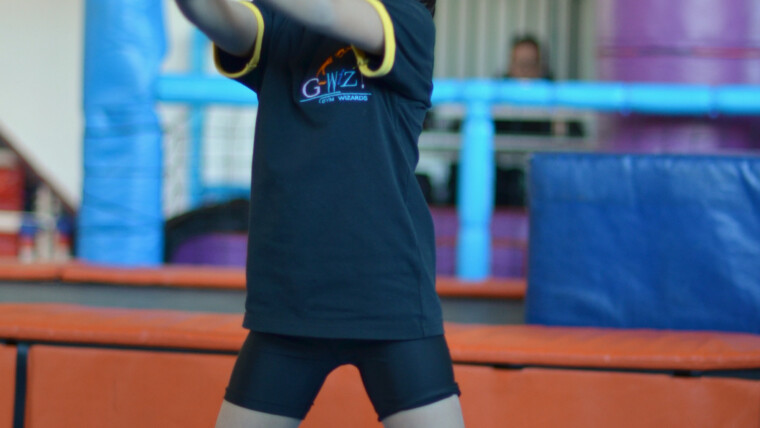

Ask a child to stand on one foot and count to five. Somewhere around “three”, something wonderful happens: a wobble. Arms fly out, the free foot hovers, a little face scrunches in concentration — and then, very often, they find their balance again.
That wobble is not a failure. It is balance for kids in action: a young body noticing that it is tipping, and working out how to fix it. At Gym Wizards, we love those moments, because every wobble is practice.
What Balance Really Is
Balance looks simple from the outside, but it is a real team effort. In her analysis of the Gym Wizards programme, paediatric occupational therapist Tiffany Heaney explains that balance draws on three sources of information:
- Vision — what your child sees around them.
- Proprioception — the body-position sense that comes from muscles and joints. Put simply, it tells us where our arms and legs are without looking. Animal walks are a playful way to explore it — read our article on animal walks and body awareness.
- The vestibular system — the balance organs in the inner ear, which notice head movement and which way is up.
The brain brings all three together and makes tiny, automatic adjustments to keep us upright. When one of them is challenged — eyes closed, a squishy mat underfoot, or a turn of the head — the others have to work a little harder.
Static and Dynamic Balance: Two Kinds of Steady
The report describes two types of balance that children need:
- Static balance means staying steady while holding still — like balancing on one foot or holding a handstand.
- Dynamic balance means staying in control while moving — like riding a bike, running, or getting through an obstacle course.
Three things make any balance easier or harder:
- Centre of gravity — the higher it is, the harder it is to balance. Standing is harder than sitting.
- Base of support — the smaller it is, the harder it is. One foot is harder than two, and feet together is harder than feet apart.
- The surface — a flat, firm floor is easier than a soft, bumpy or moving one.
Your child’s height, body and surroundings keep changing as they grow, so their balance keeps adapting too.
Why the Wobble Is a Good Sign
When a child holds a Stork Stand (standing on one leg), they will naturally wobble on the balancing leg. The report describes how the vestibular system picks up those small head movements, and the brain responds by calling on the muscles needed to stay upright — reaching an arm or leg out, or making small adjustments through the body.
In other words, the wobble is the body learning. Each small correction is a chance to practise.
It also helps to know that, according to the report, balance keeps developing right up to around age 12, so a wobble during a new balance challenge is simply part of practising. Children develop at different rates, so keep things comfortable, and if you are ever concerned about your child’s balance, ask a qualified professional.
Why Balance Matters in Everyday Life
Balance quietly supports so much of what children do every day. The report highlights a few examples that parents and caregivers will recognise:
- Confidence on the playground. Children who feel steady in their bodies tend to use them with more confidence — on jungle gyms, in sport and in play.
- Getting dressed. Pulling on trousers while standing on one leg is a balance task.
- A steady base for busy hands. When the body is stable, the hands are freer for tasks like colouring in and cutting. Balance also helps children reach across their body — see our article on crossing the midline.
- Staying on their feet. The report notes that children who find balance difficult often fall more and can seem clumsy.
Balance is also closely linked with core strength — the muscles of the tummy, back, shoulders and hips that keep the body stable. If you are curious about that side of things, read our article on which muscles gymnastics strengthens. For a wider look at movement and the early school years, see how gymnastics supports school readiness in early childhood.
How Gym Wizards Builds Balance, Step by Step
Gym Wizards uses a progression-based curriculum, so balance is built in layers, at each child’s own pace:
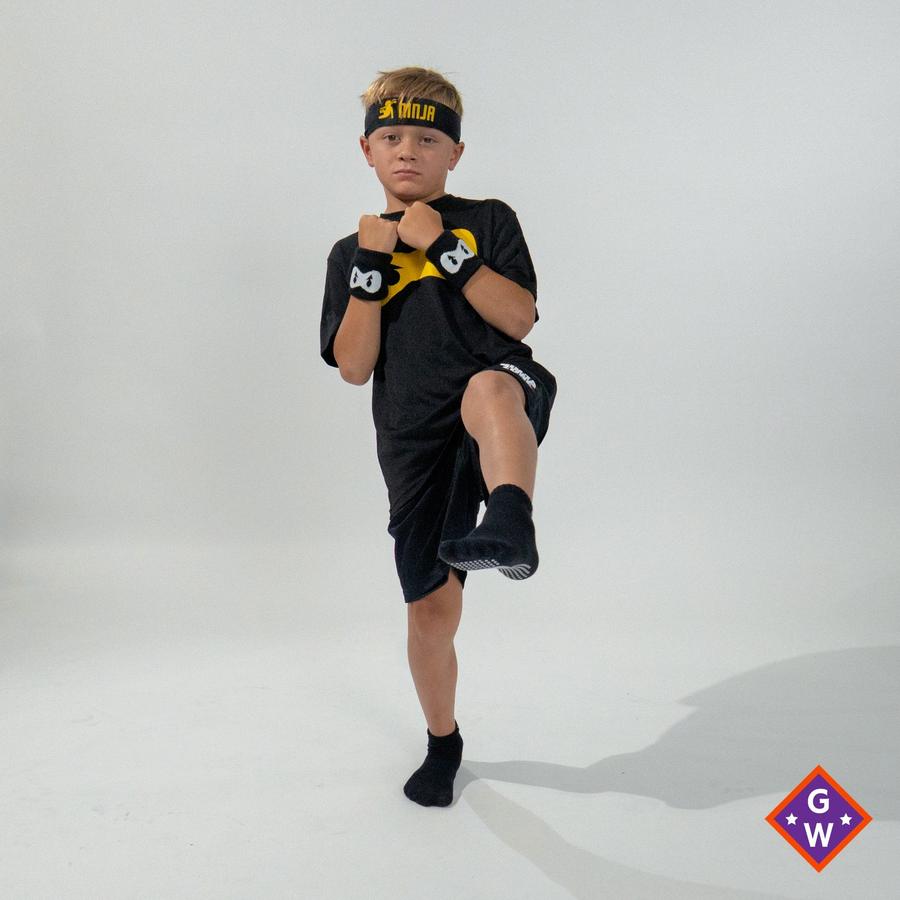
- Still shapes first. Children learn basic body positions with a narrow base of support, such as the Stork Stand (a one-legged balance like the one in the photo at the top of this article), the Tuck Sit and the V-Sit.
- Then balance on the move. Once still shapes feel steady, children practise moving while staying balanced, with skills such as the Bunny Hop and the Donkey Kick.
- Then putting it all together. At more advanced levels, children link skills into sequences — like several cartwheels in a row — and take on hurdling and rebounding drills where their landing surface and body position keep changing.
- Ninja Parkour challenges. In Ninja Parkour, children combine both kinds of balance: holding steady after landing on an obstacle in a Cat Grab, or moving quickly across surfaces in a Vertical Wall Run.
Classes take place on gym mats and air tracks, which are softer and less even than a hard floor. As the report points out, that surface asks children to work a little harder to balance — in a safe, cushioned space.
Simple Balance Games to Try at Home
You do not need equipment to play with balance. A few easy ideas:
- Statue freeze. Play music, and when it stops, everyone freezes on one foot. Swap feet each round.
- Tightrope walk. Lay a piece of string or tape in a straight line on the floor and walk along it, heel to toe.
- Wobble count. Stand on one foot and count how long you can hold it. Then try the other foot — most of us have a “better” side.
Keep it light and fun. Use a clear, non-slip space, stay close by, and stop if there is any pain or distress. Celebrate the effort, not a time on the clock: “You wobbled and found your balance again!” is a lovely thing for a child to hear. If your child has an injury or is receiving therapy, check with their treating professional first.
Ready to Wobble With Us?
Every Gym Wizards class gives children the chance to practise balance through fun, purposeful movement — alongside strength, fitness and plenty of confidence-building moments.
Find a Gym Wizards class near you or read more about our gymnastics classes.
Stronger. Fitter. Smarter Kids.
Source note: This article draws on Tiffany Heaney’s October 2020 paediatric occupational-therapy analysis of the Gym Wizards programme, especially the sections on balance and the vestibular system. It describes opportunities to practise, not guaranteed developmental results. Gym Wizards does not replace occupational therapy, physiotherapy or speech therapy.