


Let’s start from the very beginning, a very good place to start…
No we are not talking about do, re, me… we are talking about a, b, c! When people talk about school readiness, the conversation usually starts with letters, numbers and whether a child can recognise their own name on a worksheet. Rarely does anyone ask the more practical questions, like whether a child can sit comfortably for more than five minutes, hold a pencil without gripping it like a drumstick, or move through a busy classroom without bumping into everything in sight!
South African research tells us that these questions matter more than we might think. A 2023 concept analysis published in the South African Journal of Childhood Education identifies physical readiness as one of eight essential components of school readiness. Physical readiness includes gross motor skills, fine motor skills, sensory-motor development and perceptual-motor abilities. In simple terms, it is about how a child’s body works, moves and copes with the physical demands of school.
These skills are not developed at a desk! They are built through movement, play, climbing, balancing, jumping and yes, sometimes falling over and getting back up again.
School readiness is about the whole child, not just the brain
The research is clear that school readiness is not a single skill or milestone. It is a combination of behavioural, intellectual, language, literacy, numeracy, physical, socio-emotional and classroom skills. All of these areas work together and when one is underdeveloped, the others often struggle to compensate. For parents, this can be reassuring. If your child is not yet interested in reading but loves to move, climb and explore, that does not mean they are behind. Movement plays a key role in developing attention, confidence and self-regulation, which all support learning later on.
Physical development gives children the stability they need to focus, the endurance to participate in classroom activities and the confidence to try new things. Without it, even bright and curious children may find school overwhelming.
Why physical development matters more than you think
Classrooms are surprisingly physical environments. Children are expected to sit upright, manage their bodies in confined spaces, move between activities, line up, carry bags, open lunchboxes and write for increasing periods of time. All of this requires strength, coordination and body awareness. When children struggle physically, it often shows up as behavioural or attention difficulties. The child who cannot sit still may actually lack core strength. The child who avoids writing may be struggling with hand stability. The child who seems constantly distracted may be overwhelmed by sensory input.
These challenges are not a reflection of effort or intelligence. They are often signs that the physical foundations needed for school are still developing.
How gymnastics supports physical readiness for school
Gymnastics is particularly effective in supporting physical readiness because it develops multiple foundational skills at the same time. Through structured but playful activities, children learn how to control their bodies, navigate space and respond to instructions.
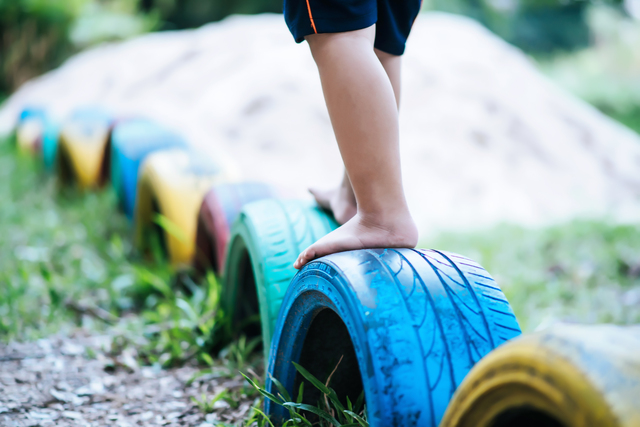
In a gymnastics class, children climb, hang, balance, roll, jump and support their own body weight. These movements strengthen the core, shoulders and hands, which are essential for posture and writing. Balance and coordination activities improve body awareness, helping children move more confidently and safely in busy environments like classrooms and playgrounds.
Gymnastics also supports sensory-motor development. When children experience different movements, speeds and positions, their brains learn how to process sensory information more effectively. This can have a positive impact on focus, emotional regulation and behaviour in a classroom setting.
From the mat to the classroom
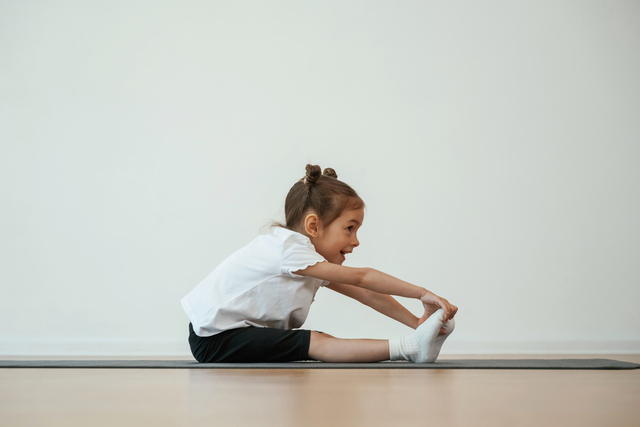
Parents are often surprised to learn how closely movement skills are linked to classroom performance. A child who can hang from a bar or hold a plank position is developing shoulder stability, which supports handwriting. A child who can balance on one foot is strengthening their core and improving postural control, making it easier to sit and concentrate.
Even skills like listening and following instructions are reinforced during gymnastics. Children learn to wait their turn, watch demonstrations, remember sequences and try again when something feels tricky. These are exactly the kinds of behaviours expected in a school environment. And yes, all of this happens while they are having fun. From a child’s perspective, they are just playing. From a developmental perspective, they are building the foundations for learning.
Movement supports confidence and emotional readiness too
School readiness is not only about skills, but also about how children feel. Gymnastics offers children opportunities to experience success, overcome small challenges and build confidence in their abilities. When a child masters a new movement, even something as simple as a forward roll, it sends a powerful message that they can do hard things. This confidence carries over into the classroom, where trying something new can feel just as intimidating.
Group classes also support social and emotional development. Children learn to share space, take turns and cope with frustration when things do not go perfectly the first time. These experiences help build resilience, which is a key part of adapting to school life.
Play, movement and a bit of chaos in the best way
Early childhood was never meant to be calm, quiet and tidy all the time. Children learn through movement, exploration and a fair amount of joyful chaos. Gymnastics provides a safe and structured way for children to move freely while still learning important boundaries and routines. Instead of asking young children to sit still before their bodies are ready, movement-based programmes allow them to develop the physical and emotional skills that make sitting still possible later on.
Building strong bodies to support ready minds
The South African Journal of Childhood Education makes it clear that school readiness is about preparing children to engage meaningfully with learning and physical readiness plays a critical role in making that possible. At Gym Wizards, we believe that strong, confident bodies support focused, capable learners. Our programmes are designed to support early childhood development in a way that feels fun to children and reassuring to parents.
Because sometimes the best preparation for school is not another worksheet, but a chance to climb, roll, balance and MOVE!

