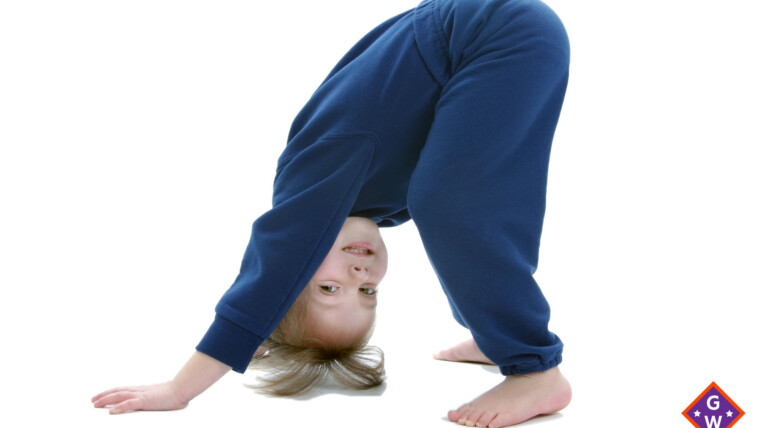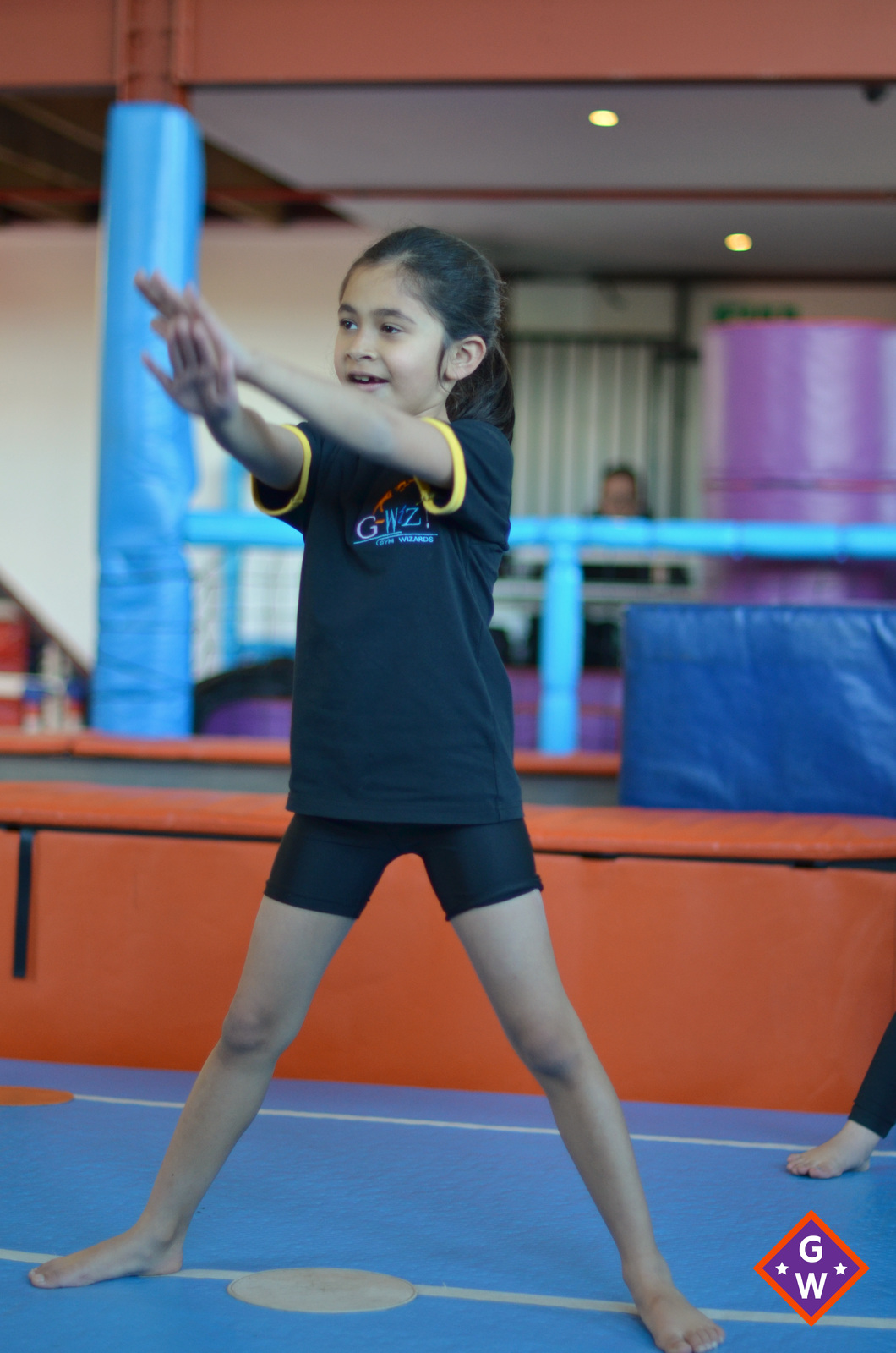

Picture your child waving goodbye with a big, sweeping arm that travels all the way across their body and out the other side. Or scooping up a toy on their left with their right hand, without stopping to swap. It looks like nothing at all. It is actually a skill with a name: crossing the midline.
Many parents first hear the term from a teacher or therapist, and it is perfectly fine if it is new to you. Here is what it means, where children use it every day, and how playful movement gives them lots of chances to practise it.
What is crossing the midline?
Imagine a line running straight down the middle of your child’s body, from the top of the head to the feet. That imaginary line is the midline. Crossing the midline simply means a hand, foot or the eyes moving over into the space of the other side of the body.
In her analysis of the Gym Wizards curriculum, occupational therapist Tiffany Heaney describes it as the ability to cross over that line spontaneously during everyday movement. She also explains that it builds on bilateral coordination, which is using both sides of the body together in an organised way.
Where children use it every day
Occupational therapists describe crossing the midline as part of many ordinary tasks: reading and writing across a page, getting dressed, eating with a knife and fork, and catching a ball that comes from the side. The Alder Hey Children’s NHS Foundation Trust crossing-midline leaflet for parents gives a clear, parent-friendly overview.
You might notice that some children swap hands halfway through a task rather than reach across, or turn their whole body to avoid reaching over. Tiffany Heaney’s report mentions hand-swapping as something that can happen when crossing the midline is not yet comfortable. On its own, this is not a reason to worry. Children develop at different paces. If you have a concern about your child’s development, chat to your GP or an occupational therapist.
Crossing the midline in Gym Wizards classes
Movement classes are full of reaching, twisting and swapping sides, often without anyone naming it. The occupational therapist’s report gives several examples from the Gym Wizards curriculum:
- Rope skipping: swinging the rope from side to side with both hands, and moves like the Cross Wrap and Arm Wrap. In class, children also skip to a beat: see music and movement for kids.
- Cartwheel drills: hands and feet travel in a sequence from one side to the other.
- Strengthening exercises: Russian Twists and Shoulder Taps, where the hands reach across to the opposite side. These are core exercises too: see core strength for kids.
- The Bunny Hop over a rope: hands on the floor, feet hopping from one side of the rope to the other.
To a child, these are just fun challenges. Underneath, each one is a chance to practise reaching across, coordinating both sides of the body and moving in sequence. Bilateral coordination also shows up in animal walks, which we explore in our article on animal walks and body awareness. And because the report notes that good balance helps children cross their midline, you may enjoy Balance for Kids: Why the Wobble Matters.
Playful ways to cross the midline at home
You do not need equipment or a lesson plan. A few ideas, adapted from the Alder Hey occupational therapy leaflet mentioned above:
- Bubble popping: pop bubbles using one hand only. The ones floating on the other side mean reaching across.
- Big figure eights: draw large, sideways figure eights in the air, in the sand or with chalk, using the same hand the whole way.
- Steering wheel: hold a plastic or paper plate like a steering wheel and turn it far enough that the arms cross over.
- Knee taps: march around the garden and tap each knee with the opposite hand.
Keep it light. Let your child choose the game, stop while it is still fun, and skip anything that hurts. There is no right number of repetitions. These ideas are for fun at home and are not a treatment plan.
Small moves, big curiosity
Gym Wizards uses a progression-based curriculum, so children practise skills step by step at their own pace. Crossing the midline is not something to drill or test. It is one of many little skills tucked inside the twists, swings and hops that make a class fun.
Next time your child reaches right across to catch a ball or tap a knee, you will know there is a bit more going on than meets the eye.
Ask your Gym Wizards instructor which reaching and twisting moves your child has been trying in class.
New to Gym Wizards? If you are looking at gymnastics or Ninja Parkour classes in Cape Town, ask about a trial class. Our team can help you choose between Kenridge, Pinelands and Llandudno and explain the booking and payment steps.
Source note: This article draws on Tiffany Heaney’s October 2020 occupational-therapy analysis of the Gym Wizards programme, especially printed pages 25–26, 28, 30 and 34–35. It describes opportunities to practise, not guaranteed developmental results. Gym Wizards does not replace occupational therapy, physiotherapy or speech therapy.